
Driving Efficiency and Sustainability: The Next Generation High-Pressure Fuel Pump
When we talk about building cleaner, more efficient cars, most people think about EVs or battery tech. But here’s the thing: traditional engines still power the majority of vehicles on the road — and they’re not going away anytime soon. That’s why improving core components like the high-pressure fuel pump (HPFP) is such a big deal.
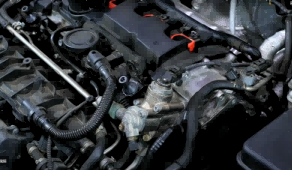
The HPFP might not be the flashiest part of the engine, but it plays a huge role in how clean, efficient, and reliable an engine can be. Our latest design shows just how much impact one component can make.
Cutting Emissions at the Source 🌍
Let’s start with emissions. Regulators everywhere are tightening the rules, and for good reason. Our new HPFP helps reduce emissions by making fuel burn more completely. The result? Fewer harmful gases coming out of the tailpipe.
For automakers, this means meeting global standards without scrambling for expensive fixes. For drivers, it means a smoother, cleaner ride that’s easier on the environment.
Saving Fuel, Saving Costs ⛽💰
Fuel efficiency isn’t just about saving the planet — it’s also about saving money. By delivering fuel at the right pressure, in the right amount, and at the right time, the pump squeezes more energy out of every drop.
Over time, that translates into noticeable fuel savings. If you’re running a fleet, those savings add up fast.
Accuracy That You Can Feel
One of the coolest upgrades is the stronger electromagnetic force inside the pump. Think of it as a stronger “muscle” that makes fuel delivery much more precise.
Why does that matter?
- Engines run smoother and more consistently.
- Advanced strategies like turbocharging work better.
- Drivers get a more responsive experience behind the wheel.
In short, the engine feels more alive, and less wasteful.
Smaller, Stronger, Smarter ⚙️
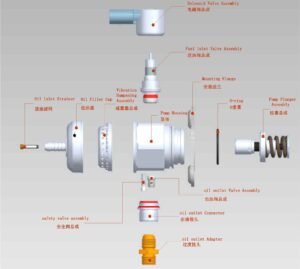
Inside the pump, we’ve re-engineered the plunger design. It’s more compact but generates higher pressure than older versions. That means:
Fuel gets atomized more finely (better combustion, less smoke).
It fits into tighter spaces, perfect for modern downsized engines.
It supports next-gen direct injection systems that demand extreme pressure.
Compact doesn’t mean compromise — in this case, it means smarter engineering.
Less Dependence on Costly After-Treatment Systems
Anyone in the industry knows how expensive exhaust after-treatment can be. Filters, converters… they’re essential, but they add cost and maintenance headaches.
Our HPFP reduces the load on those systems by keeping combustion cleaner from the start. That’s a win-win: lower costs for automakers, fewer replacements for drivers, and less hassle overall.
A Lighter Touch: 25% Weight Reduction 🚗
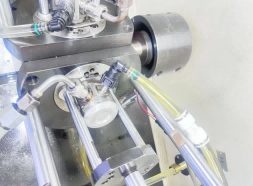
We’ve also introduced a new forged fuel rail that cuts weight by 25%. That’s not just a number on a spec sheet — it has real benefits:
Lighter vehicles burn less fuel.
Stronger materials last longer.
Easier integration for engineers designing next-gen powertrains.
Every kilogram matters when you’re chasing efficiency.
Why This Matters for the Industry
Put it all together — lower emissions, better fuel economy, improved accuracy, compact design, reduced reliance on after-treatment, and weight savings — and you get more than just a new pump.
You get a system-level improvement that:
Helps OEMs stay compliant with tough global standards.
Reduces costs across the supply chain.
Supports sustainability goals without sacrificing performance.
Makes cars more enjoyable (and affordable) to drive.
Looking Ahead
The future of mobility isn’t about one silver bullet. It’s about making every part of the system smarter and more efficient. That’s exactly what we’re doing with the high-pressure fuel pump.
It may be just one component, but its ripple effect is huge — on performance, on costs, and on the planet.
At TRANSMITEK, we believe innovation isn’t just about fancy tech. It’s about making real improvements that matter to manufacturers, drivers, and the environment. And this new HPFP is one step forward in that journey.